| News
& Community - E: [email protected] |
| Bangladeshi
Cuisine |
 |
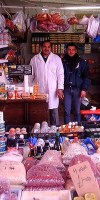
The Bangladeshi staple dish is rice and curry. Fish
is the most popular and hilsa is the national fish of Bangladesh.
Curries comes in a variety of flavours and spices that differ radically
in taste such as Korma and Chicken Tikka.
Traditionally Bangladeshi people eat lots of fish
and vegetable. Taking sweets and yoghurts after meals is also traditional.
These include sweets such as gulabjam, rashagulla, halua and douie.
Bangladesh is a tropical country and is home to all sorts of exotic
fruits. Jackfruit is the national fruit of Bangladesh, other exotic
fruits are mango, Lychees and coconut.
|
| Jobs
within the Bangladeshi Community |
|
Many Bangladeshis in the east end are self-employed
in catering and retail businesses. The rate of unemployment is high
in Bangladeshi community. Many of the unemployed are from the first
generation Bangladeshi people who lost their jobs due to the closure
of the manufacturing industries and steel industries.
|
| National
Dress |
|
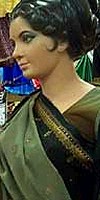
National dress for men is panchabi -
paijama (Long shirt and lose trouser) and for women is the Sari (Long
piece of cloth wrapped around the body in a particular fashion) and
a Blouse. However, in urban areas men wear lungies (a piece of cloth
wrapped around the lower part of the body like a skirt). Young Girls
wear Salwar (lose trouser) and kameez (long shirt like dress) and
men also wear suites in cities. Bangladeshis are a religious people
and prefer wearing conservative dress. |
| Family
StructureFamily Structur |
|
Traditionally Bangladeshi families are large and
extended. It is because people believe that it shows unity and pride
as a family living jointly under the same roof. Traditionally the
family would include the mother, father, sons, daughter-in-laws
and grandchildren. Usually the family live together and hold property
in common. Bangladeshi people hold great respect for their parents
and the older member of the family. They consider it as their responsibility
to look after their elderly parents, grand parents and relatives.
The idea of the joint family remains the traditional way of thinking
and has a powerful effect on how Bangladeshis approach family life
both in Bangladesh and elsewhere in the world.
Nowadays, there are some differences in Bangladeshi
family structure in Britain as well as in Bangladesh. Many families
divide and live separately from one another, people move elsewhere
in search of employment and in some cases, may move to a different
town or travel overseas. Few houses in the UK are large enough to
accommodate a large extended family and this exacerbates the pressure
to live separately.
|
| Marriages |
|
Marriage is a family affair, usually arranged by
parents, relatives and friends of the family. These guardians would
choose the groom or brides for their daughter or son. The bride
and groom are then allowed to meet and once they agree, consent
is given for the wedding to go ahead. In these days it is not uncommon
for boys and girls to choose their partners by falling in love or
by choice. Traditionally, marital ceremonies and rituals in Bangladesh
vary from religion to religion. Officially both members of the couples
have to be of age 18 & over. In the rural areas rules are broken
and marriage can take place earlier.
|
| Death |
|
Muslims believe that when a person dies his or her
soul is taken away by the angel of death, the departed soul awaits
resurrection on the day of judgement. The departed soul thus, enters
a "waiting state" known as Barzakh. Even during the state of waiting
the departed person is accountable for his deeds in the material
world. When a Muslim is dying, relatives and friends sit around
reading verses from the Holy Quran and praying for the peaceful
departure of the soul.
A dying person, if possible, makes a final declaration
of faith by reciting: "There is no God except Allah, Mohammed (pbuh)
is Allah's true messenger". This declaration is called the Shahadah
and is a very important part of Muslims' spiritual life. By this,
the departed soul asks for God's mercy to accept the person as a
Muslim and forgive his or her sins. The body is buried as soon as
possible, if possible on the same day. It is prepared for burial
by a ritual washing, known as ghusal (bath), and is rapped in a
dress called Kafon, which is three pieces of white cotton cloth.
Sometimes relatives spray athar (religious perfume)
on the dead body. The body is taken to a Mosque or direct to the
burial ground and a funeral prayer called the Salatul Janazah is
read, asking God's forgiveness for the deceased. The body is buried
face towards Makkah, the holy city of the Muslims.
|
|
|